Science News
Discover ageing immunity and infection risk
Ageing immunity may do more than weaken defenses; it can change how the body handles infection. Discover what new research suggests.
Reviewed by Sofia Sigal-Passeck, Slothwise co-founder & National Science Foundation-backed researcher
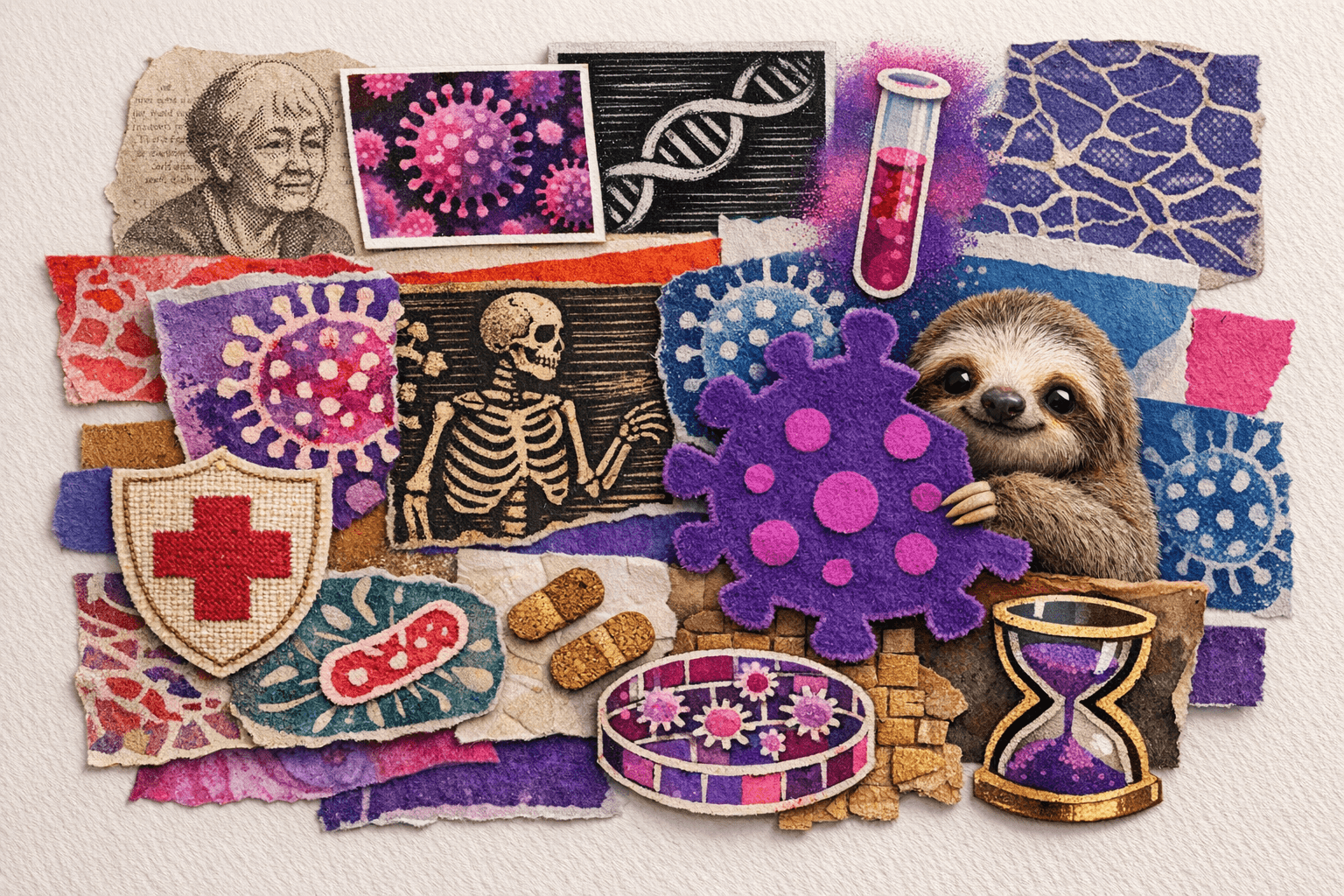
Getting older changes the immune system, but not always in the simple way people expect. Many of us imagine ageing immunity as a shield that just gets weaker over time. New mouse research suggests something more surprising: some genes that help young bodies survive infection can become harmful later in life. Nature highlighted this idea in a news report on how ageing changes the body"s response to infection, pointing to a deeper shift in how the body balances protection and damage.
What ageing immunity really means
When germs enter the body, the immune system has two big jobs. First, it tries to fight the invader. Second, it tries to limit harm to the body itself. Scientists sometimes call this second job "tolerance." A person or animal can get very sick not only because a germ is strong, but also because the body"s own response causes too much damage.
That is why this new finding matters. It suggests that ageing does not simply turn immunity down like a dimmer switch. Instead, ageing may rewire the system. Some protective programs that are useful in youth can become less helpful, or even harmful, in older age.
How genes can protect young bodies but harm older ones
In the mouse study discussed by Nature, researchers found that genes linked to infection defense in younger animals could have the opposite effect later in life. That does not mean these genes are "bad." It means context matters. A young body and an old body are not working with the same tissues, energy supply, repair systems, or inflammation levels.
Think of it like a smoke alarm that is very helpful in a small kitchen. In a different house with older wiring, the same alarm setup might create confusion or extra problems. The tool has not changed, but the environment has.
This fits with a growing view in ageing science: older adults may struggle with infection not only because they cannot fight germs as strongly, but also because their bodies may respond in a less balanced way. That could help explain why infections such as flu, pneumonia, and sepsis are often more dangerous in later life.
Why infection is harder on older adults
As we age, the immune system changes in several ways. Some immune cells become slower. Others become too active in the wrong moments. Low-grade inflammation can also build up over time. Scientists often call this "inflammaging." The result is a body that may be less precise when trouble appears.
In everyday life, this matters because an older person can look fine at first and then decline quickly during an infection. Fever may be smaller. Symptoms may be less obvious. Recovery can take longer. The new research helps show why: the problem may be part weaker defense, part altered tolerance to stress and tissue damage.
For readers interested in the bigger picture of genes and ageing, Slothwise has a helpful explainer on how genetics shapes frailty as we age. It is useful background, but the underlying scientific findings come from the original research teams, not from Slothwise.
What this means for healthy ageing and everyday choices
This kind of science does not mean one gene test will suddenly tell you exactly how to avoid infection in old age. Mouse studies are valuable, but mice are not people. Researchers still need to confirm which mechanisms matter most in humans.
Still, the message is practical. Healthy ageing is not just about "boosting" immunity. In fact, an immune system that is too aggressive can also be a problem. The goal is balance.
That is why basic habits still matter so much: staying up to date on vaccines, sleeping well, eating enough protein, managing long-term conditions, and getting medical help early when an infection starts. These steps support the body when its response becomes less predictable with age.
This is also where health AI may become useful in the future. Smart tools could help doctors spot early warning signs of dangerous infections in older adults, especially when symptoms are subtle. Used carefully, health AI and platforms like Slothwise may help people understand risk patterns earlier, though they should support, not replace, medical care.
How scientists may use this discovery in future treatments
If ageing changes infection tolerance, future treatments might not focus only on killing germs. They could also aim to protect tissues, calm harmful inflammation, or adjust specific gene pathways that behave differently in old age.
That idea is already shaping ageing research more broadly. Scientists are asking whether some age-related problems can be improved by tuning the body"s repair and stress responses, not just by attacking disease directly. For extra context on how researchers are changing biology more quickly in the lab, Slothwise also offers a simple overview of gene-edited farm animals made in one generation. Again, that article is for background reading, not the source of the infection study.
What researchers still need to learn about ageing immunity
There are still important open questions. Which genes switch from helpful to harmful with age? Does this happen in all infections, or only some? Do women and men show the same patterns? Can medicines safely shift the immune response without making infections worse?
Those are big questions, and careful human studies will be needed. But one lesson is already clear: ageing immunity is more complicated than simple decline. The immune system changes its behavior, and that can shape who gets severely ill.
For families, caregivers, and older adults, that is a helpful reminder to take infections seriously, even when symptoms seem mild at first. The body in later life is not just weaker. It may be playing by different rules.
Cool Health Tech
Apr 10, 2026
Buoy Health vs Slothwise: Which AI Health App Is Right for You?
Buoy Health was one of the original AI symptom checkers, born at Harvard and backed by Cigna, Humana, and Optum. It raised $87 million. Here is how it compares to Slothwise in 2026.
Cool Health Tech
Apr 10, 2026
Ada Health vs Slothwise: Which AI Health App Is Right for You?
Ada Health is the most accurate AI symptom checker, validated in a peer-reviewed BMJ Open study. Slothwise connects to your actual medical records and monitors your health continuously. They solve different problems.
Cool Health Tech
Apr 10, 2026
K Health vs Slothwise: Which AI Health App Is Right for You?
K Health raised over $400 million and shut down its consumer app in December 2025. Slothwise is independently built, listed on Medicare.gov, and still here. Here is how the two compare.