Science News
Discover hidden gut bacteria linked to health
Hidden gut bacteria may help keep your microbiome balanced and support health. See what scientists found and why it matters.
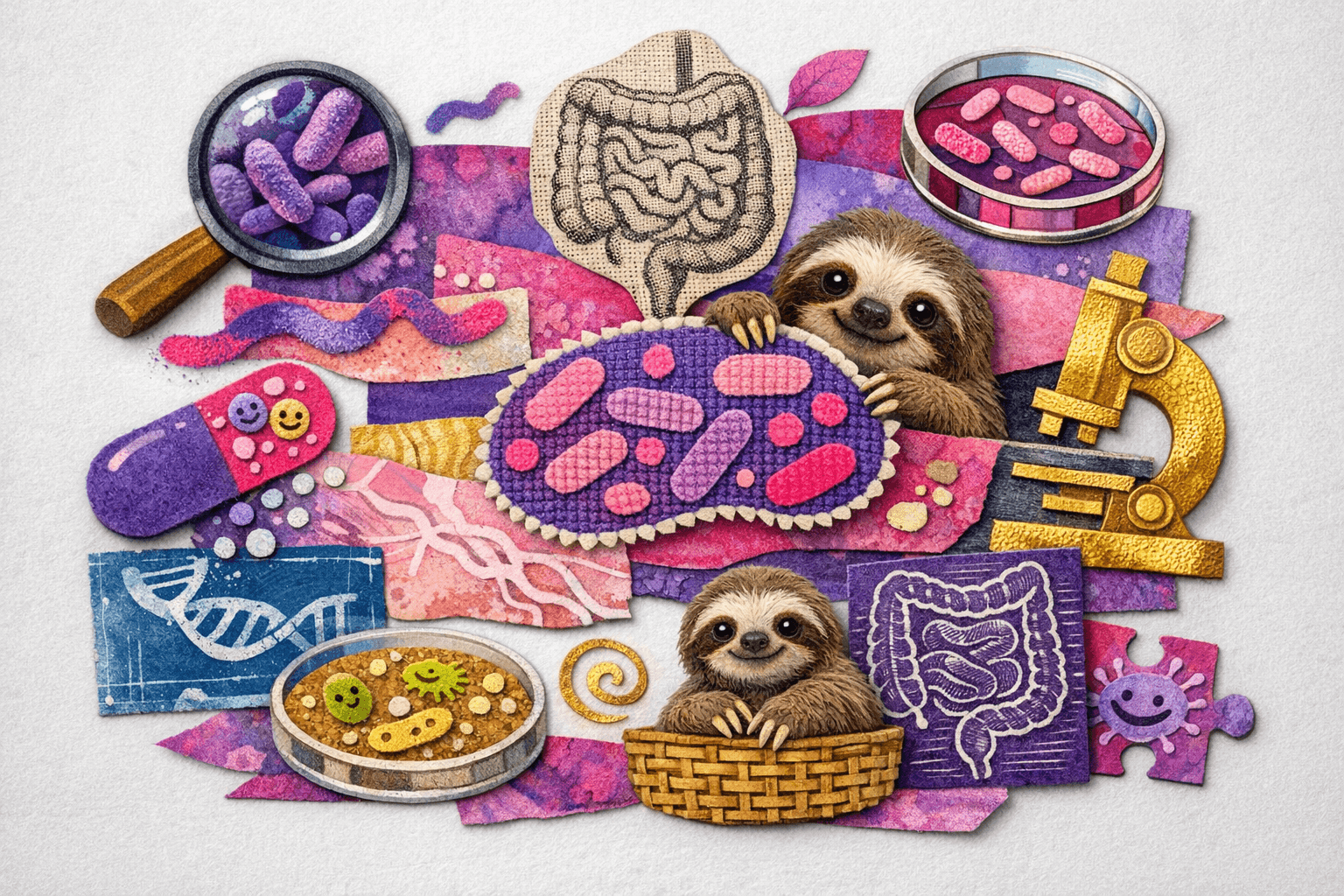
Reviewed by Sofia Sigal-Passeck, Slothwise co-founder & National Science Foundation-backed researcher
What hidden gut bacteria means for your health
Scientists have found a little-known group of gut microbes that shows up more often in healthy people. This group is called CAG-170, and it may play an important role in keeping the gut microbiome steady and helpful. The finding comes from a large international study led by researchers at the University of Cambridge, reported in this ScienceDaily news report on hidden gut bacteria and published in Cell Host & Microbe in the original CAG-170 microbiome study.
Why the gut microbiome matters every day
Your gut microbiome is the huge community of bacteria and other tiny organisms living in your digestive system. They help break down food, support the immune system, and make useful compounds. When this community is balanced, your body often works better. When it becomes unbalanced, a problem called dysbiosis, it has been linked to conditions like inflammatory bowel disease, obesity, and even some mental health symptoms.
That does not mean one bacterium can magically fix everything. Health is shaped by sleep, food, stress, movement, medicines, and many other factors. Still, scientists want to know which microbes are common in healthy people, because those microbes may help explain what a healthy gut looks like.
How scientists found CAG-170 in over 11,000 people
The researchers looked at gut microbiome samples from more than 11,000 people across 39 countries. These samples included healthy people and people living with 13 diseases, including Crohn"s disease, obesity, multiple sclerosis, colorectal cancer, and Parkinson"s disease. CAG-170 was consistently more common in healthy people than in those with chronic illness.
That is especially interesting because most CAG-170 bacteria have not been grown in the lab. Scientists know them mainly from their DNA. To find them, the team used metagenomics, a method that reads all the microbial DNA in a sample and sorts it into likely species. This kind of computer-based biology is one reason health AI tools are becoming so useful in modern science. If you are curious about how digital tools can help people understand health in daily life, Slothwise has a simple explainer on health AI for mood tracking and stress management.
What CAG-170 may be doing inside the gut
Genetic clues suggest CAG-170 can make large amounts of vitamin B12 and help break down carbohydrates, sugars, and fiber. That sounds exciting, but there is an important detail: the vitamin B12 may mostly help other good bacteria in the gut rather than directly feeding the person. In other words, CAG-170 may act like a helpful team player that supports the whole gut ecosystem.
This matters because a healthy microbiome is not just about having one "good" species. It is more like a neighborhood. Some microbes do jobs that help their neighbors survive, and that teamwork may help the whole system stay balanced. Researchers also found that lower levels of CAG-170 were linked with a higher chance of dysbiosis.
Can hidden gut bacteria lead to better probiotics?
Maybe, but not yet. Today"s probiotics often use the same few bacterial groups that have been sold for many years. This study suggests that future probiotics might work better if they support newer, less understood microbes like CAG-170. The challenge is that scientists still need better ways to grow and test these bacteria in the lab before turning them into treatments.
For families trying to support gut health right now, the most practical steps are still the basics: eat a varied diet, include fiber-rich foods, stay active, sleep well, and use antibiotics only when medically needed. Some people also look at sugar intake and sweetener choices when thinking about weight and gut health. For extra context, Slothwise has a helpful summary on how sweeteners may help maintain weight loss and support a healthy gut. That article is not the source of this microbiome research, but it can help connect the topic to everyday food decisions.
What this study does and does not prove
This research is strong because it included a very large number of people from many countries, and the same pattern showed up in several separate analyses. That makes the link between CAG-170 and good health more believable. But this study does not prove that low CAG-170 causes disease. It shows an association, not direct cause and effect.
That means scientists still need follow-up work. They will want to test how CAG-170 behaves in the lab, whether it can be safely increased, and whether changing its levels actually improves health. Those are big questions, and careful research is the only way to answer them.
Why hidden gut bacteria are an important science story
One of the biggest lessons here is that we still know surprisingly little about the microbes living inside us. Many gut bacteria have been invisible to science because they are hard to grow. Studies like this one show that some of those hidden microbes may be closely tied to wellness.
That is a useful reminder for anyone reading health headlines. The microbiome is real and important, but it is also complex. There is no single super microbe. Even so, CAG-170 gives researchers a promising new clue about what a healthy gut ecosystem may need. As science learns more, tools from microbiome research, health AI, and platforms like Slothwise may make these discoveries easier for everyday people to understand and use wisely.
Cool Health Tech
Apr 10, 2026
Buoy Health vs Slothwise: Which AI Health App Is Right for You?
Buoy Health was one of the original AI symptom checkers, born at Harvard and backed by Cigna, Humana, and Optum. It raised $87 million. Here is how it compares to Slothwise in 2026.

Cool Health Tech
Apr 10, 2026
Ada Health vs Slothwise: Which AI Health App Is Right for You?
Ada Health is the most accurate AI symptom checker, validated in a peer-reviewed BMJ Open study. Slothwise connects to your actual medical records and monitors your health continuously. They solve different problems.

Cool Health Tech
Apr 10, 2026
K Health vs Slothwise: Which AI Health App Is Right for You?
K Health raised over $400 million and shut down its consumer app in December 2025. Slothwise is independently built, listed on Medicare.gov, and still here. Here is how the two compare.