Science News
Discover how carbs may affect dementia risk
Discover how carbs may affect dementia risk, and why low glycemic foods could help protect brain health. Learn what matters most.
Reviewed by Sofia Sigal-Passeck, Slothwise co-founder & National Science Foundation-backed researcher
What if the kind of bread, cereal, rice, or fruit you eat today could shape how well your brain works years from now? That is the big question behind a new ScienceDaily report on carbohydrate quality and dementia risk, based on research from Universitat Rovira i Virgili, TecnATox, and the Pere Virgili Health Research Institute, published in the International Journal of Epidemiology.
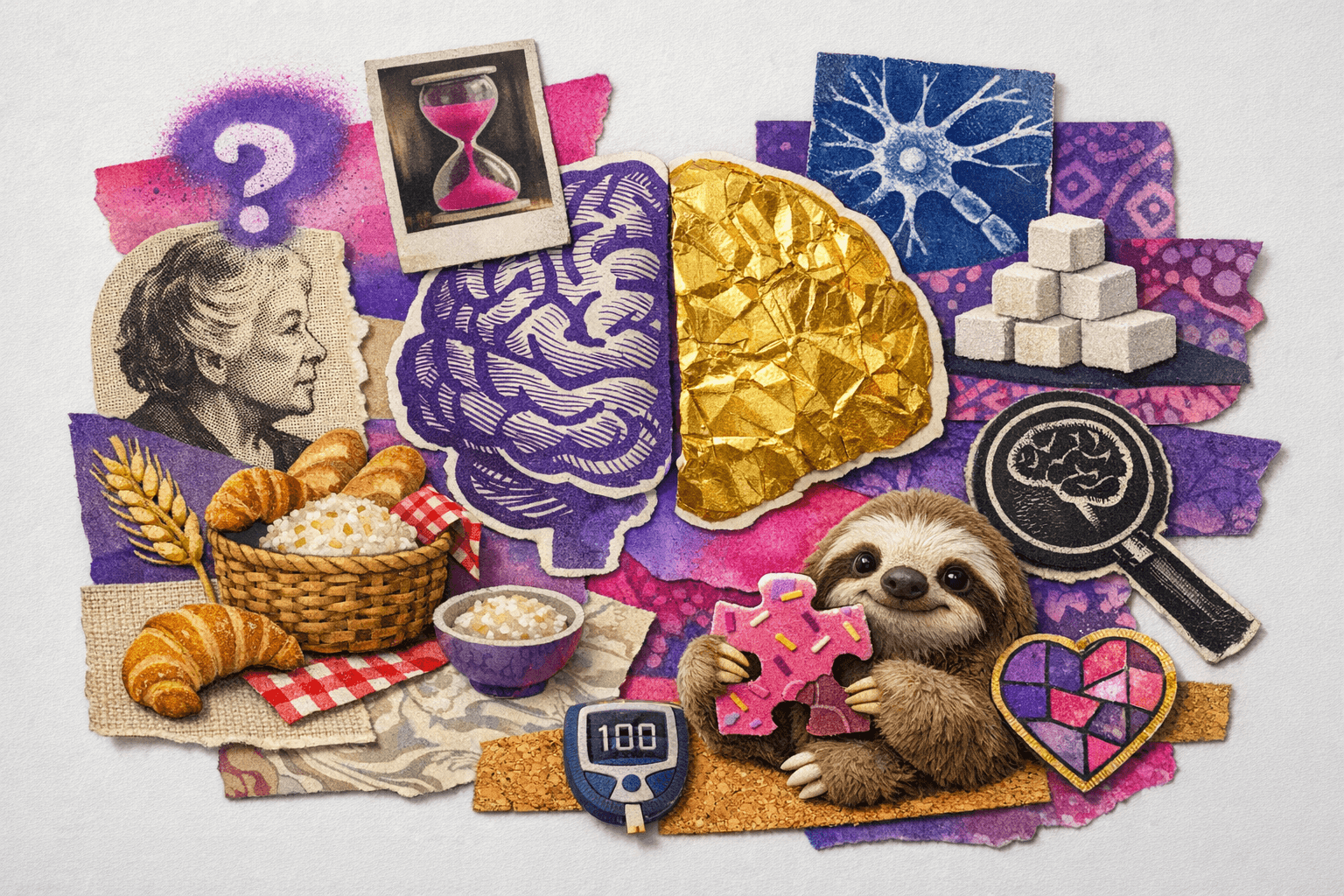
The researchers found something important: not all carbohydrates seem to affect the brain in the same way. People who usually ate lower glycemic index carbohydrates had a lower risk of developing dementia, while people whose diets leaned toward higher glycemic foods had a higher risk.
What is the link between carbohydrates and dementia risk?
Dementia is not one single disease. It is a group of conditions that affect memory, thinking, and daily life. Alzheimer"s disease is the most common type. Age is still the biggest risk factor, but lifestyle matters too, especially over many years.
Carbohydrates are a major part of most diets and often provide about half of daily energy intake. Because they affect blood sugar and insulin, scientists have long wondered whether carb quality could also influence brain health. When blood sugar rises very fast and very often, it may contribute to inflammation, blood vessel problems, and metabolic stress, all of which may be harmful for the brain over time.
This does not mean carbs are bad. It means the type of carbs you choose may matter a lot.
What the glycemic index means for brain health
The key idea in this study is the glycemic index, often called GI. GI measures how quickly a food raises blood sugar after you eat it. Foods with a high GI cause a faster jump in blood sugar. Foods with a lower GI lead to a slower, steadier rise.
Examples of higher GI foods can include white bread, some potatoes, and many heavily processed grains. Lower GI choices often include legumes, many whole grains, and most fruits.
That slower rise may be easier on the body. Over years, that could matter for the brain too. This fits with a broader pattern in nutrition research: foods that support steady blood sugar often support overall metabolic health as well.
What the dementia study found in more than 200,000 adults
This was a large long-term study. Researchers looked at data from more than 200,000 adults in the United Kingdom who did not have dementia at the start. Participants filled out detailed diet questionnaires, which helped the team estimate the glycemic index and glycemic load of their usual diets.
They then followed people for an average of 13.25 years. During that time, 2,362 participants developed dementia.
The pattern was clear. People whose diets were in the low to moderate glycemic range had a 16 percent lower risk of developing Alzheimer"s disease. By contrast, diets with higher glycemic values were linked to a 14 percent higher risk.
That does not prove that high GI foods directly cause dementia. This was an observational study, so it shows a strong association, not absolute proof of cause and effect. Still, the size of the study and the long follow-up make the findings worth taking seriously.
Best low glycemic foods for healthy aging
So what might a lower glycemic eating pattern look like in real life?
It can be surprisingly simple:
Choose oats or whole grain bread more often than sugary cereals or white bread.
Pick beans, lentils, and chickpeas regularly.
Eat whole fruit instead of sweets or sugary snacks more often.
Swap some refined grains for quinoa, barley, or brown rice.
Build meals with fiber, protein, and healthy fats, which can help slow blood sugar spikes.
This is not about being perfect. It is about patterns. A lunch with beans, vegetables, and whole grains will usually affect blood sugar differently than a meal built around refined starches and sugary drinks.
If you want more food pattern ideas, Slothwise has a helpful explainer on DASH diet and Alzheimer"s risk, which describes how fruits, vegetables, and whole grains may support brain health. For people also thinking about weight and sugar intake, there is also useful background on how sweeteners may help maintain weight loss. Those articles are for extra context, while the dementia findings here come from the university-led study.
Can changing carb quality help prevent Alzheimer"s disease?
Maybe, but we should be careful. Dementia risk is shaped by many things: age, genes, blood pressure, exercise, sleep, smoking, diabetes, education, and diet. No single food can guarantee protection.
Still, this study adds to the idea that everyday food choices may help build a healthier aging brain. Choosing better-quality carbs is one practical step that many people can actually use. It is affordable, realistic, and something families can work on together.
Experts in nutrition and public health often focus on what people can do consistently. In that sense, swapping some high GI foods for lower GI options may be one of the more doable habits.
How to use this research in everyday life
If you are wondering what to do with this information, start small. You do not need a perfect diet chart or a complicated app. Even simple planning can help. For example, if breakfast is usually sweet cereal, try oatmeal with fruit. If dinner often includes white rice, try mixing in beans or switching to a whole grain sometimes.
This kind of steady, realistic approach is where tools like Slothwise and health AI can be helpful, not as a source of the science, but as a way to track habits and make healthier choices easier to stick with.
The bigger message is hopeful. Brain health is not only about what happens in old age. It is also about the small choices repeated over years. This study suggests that when it comes to carbohydrates, quality may matter just as much as quantity.
Cool Health Tech
Apr 10, 2026
Buoy Health vs Slothwise: Which AI Health App Is Right for You?
Buoy Health was one of the original AI symptom checkers, born at Harvard and backed by Cigna, Humana, and Optum. It raised $87 million. Here is how it compares to Slothwise in 2026.
Cool Health Tech
Apr 10, 2026
Ada Health vs Slothwise: Which AI Health App Is Right for You?
Ada Health is the most accurate AI symptom checker, validated in a peer-reviewed BMJ Open study. Slothwise connects to your actual medical records and monitors your health continuously. They solve different problems.
Cool Health Tech
Apr 10, 2026
K Health vs Slothwise: Which AI Health App Is Right for You?
K Health raised over $400 million and shut down its consumer app in December 2025. Slothwise is independently built, listed on Medicare.gov, and still here. Here is how the two compare.