Science News
Exercise and alzheimer's: discover brain protection
Exercise and Alzheimer's may be linked through a stronger brain barrier that lowers inflammation and supports memory. Learn why.
Reviewed by Sofia Sigal-Passeck, Slothwise co-founder & National Science Foundation-backed researcher
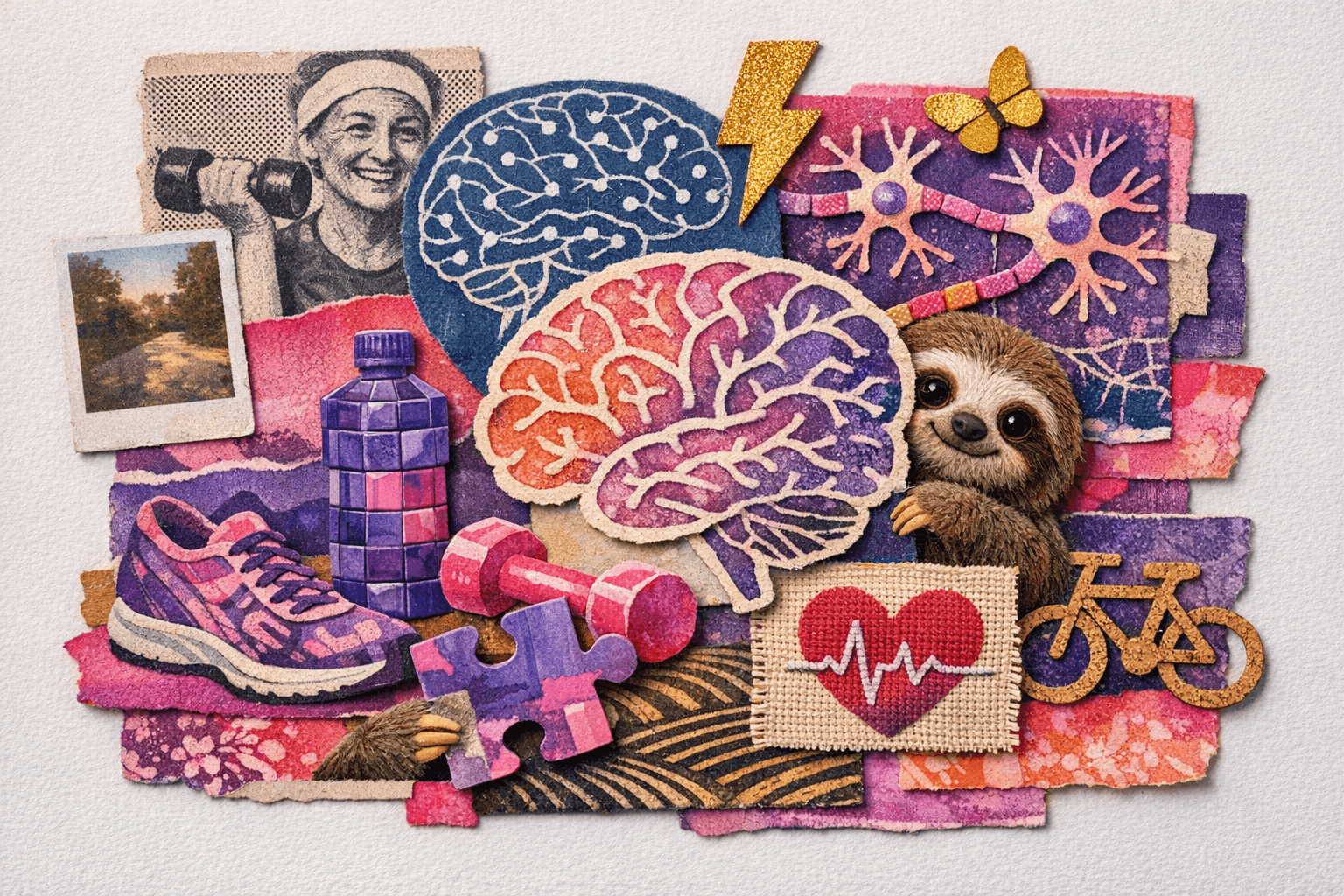
If you have ever heard that exercise is good for your brain, scientists are getting closer to explaining exactly why. A new ScienceDaily report on exercise and Alzheimer's describes research from UC San Francisco showing that physical activity may help protect the brain by strengthening the blood-brain barrier, a protective lining around brain blood vessels.
How exercise may protect the brain from Alzheimer's
The new study, published in Cell by researchers including Dr. Saul Villeda and Dr. Gregor Bieri, points to a body-to-brain pathway that starts in the liver. In the paper on GPLD1, TNAP, and blood-brain barrier aging, the team found that exercise raises levels of a liver enzyme called GPLD1. That matters because GPLD1 seems to help keep the brain's protective barrier strong as animals age.
This is important for Alzheimer's disease because many scientists think brain inflammation and a leaky blood-brain barrier are part of what drives memory loss over time. Instead of looking only inside the brain, this study shows that changes elsewhere in the body can shape brain health too.
What is the blood-brain barrier and why does it matter
Think of the blood-brain barrier as a super picky filter. It lets helpful things in, like nutrients, while keeping harmful substances out. When people get older, this barrier can weaken. If it becomes leaky, unwanted molecules from the blood can slip into brain tissue and trigger inflammation.
Inflammation is a normal part of the body's defense system, but too much inflammation can hurt healthy brain cells. Over time, that may make it harder to think clearly, learn new things, or remember details. That is one reason researchers are so interested in ways to keep the blood-brain barrier healthy.
How GPLD1 and TNAP affect brain inflammation
The big mystery was this: GPLD1 cannot cross into the brain. So how could it help memory and thinking?
The answer appears to involve another protein called TNAP. In aging mice, TNAP built up on the cells that form the blood-brain barrier. Too much TNAP made the barrier weaker and leakier. The researchers found that GPLD1 can trim TNAP from the surface of these cells. When that happened, the barrier became stronger, and inflammation dropped.
That is a neat idea because it means exercise may not need to send something directly into the brain to help it. Instead, it can change the bloodstream in a way that protects the brain from the outside.
What the mouse study found about memory and aging
The research team ran several experiments to test whether TNAP was really a key player. Young mice engineered to have too much TNAP in the blood-brain barrier showed memory and thinking problems that looked more like old age. On the other hand, when scientists lowered TNAP in older mice, the barrier leaked less, inflammation decreased, and the mice did better on memory tests.
One especially hopeful finding was timing. The scientists were able to improve this system even in mice that were already old, roughly equal to about 70 human years. That does not prove the same thing will happen in people, but it suggests the brain may still respond to help later in life.
Can exercise prevent Alzheimer's in people
Not exactly, at least not based on this study alone. This was animal research, and mouse results do not always match what happens in humans. So it is too soon to say that exercise can prevent Alzheimer's disease by this exact mechanism in people.
Still, the study fits with a lot of what doctors already know. Regular physical activity is linked with better heart health, better blood flow, lower inflammation, and better brain function. Those are all good signs. In real life, this means exercise is still one of the most practical habits for supporting healthy aging, even though it is not a guarantee against dementia.
For families thinking about everyday prevention, this body-wide view of health is useful. Food choices, sleep, blood pressure, and movement all affect the systems that support the brain. If you want more context on healthy habits, Slothwise has a simple explainer on how the DASH diet may lower Alzheimer's risk. For another example of how whole-body biology shapes blood vessels, there is also a helpful Slothwise overview of estrogen protecting blood vessels from inflammation.
Could this lead to new Alzheimer's treatments
Possibly. The researchers suggest that medicines designed to trim proteins like TNAP could one day help restore the blood-brain barrier after aging has already weakened it. That is exciting because many Alzheimer's treatment ideas focus almost only on the brain itself. This study suggests another option: protect the barrier around the brain and reduce inflammation before more damage builds up.
That said, there are still big questions. Scientists need to test whether the same GPLD1-TNAP pathway works the same way in humans, how safe it would be to target TNAP, and whether the benefits would last. Drug development takes years, and many promising lab findings never become approved treatments.
For now, the takeaway is both simple and powerful. Exercise may help the brain because it helps the whole body, including the blood vessels that guard the brain. That idea is useful whether you are a researcher, a caregiver, or just someone trying to age well. It is also the kind of practical science that makes tools like Slothwise and thoughtful health AI summaries helpful for turning complex research into everyday understanding.
Cool Health Tech
Apr 10, 2026
Buoy Health vs Slothwise: Which AI Health App Is Right for You?
Buoy Health was one of the original AI symptom checkers, born at Harvard and backed by Cigna, Humana, and Optum. It raised $87 million. Here is how it compares to Slothwise in 2026.
Cool Health Tech
Apr 10, 2026
Ada Health vs Slothwise: Which AI Health App Is Right for You?
Ada Health is the most accurate AI symptom checker, validated in a peer-reviewed BMJ Open study. Slothwise connects to your actual medical records and monitors your health continuously. They solve different problems.
Cool Health Tech
Apr 10, 2026
K Health vs Slothwise: Which AI Health App Is Right for You?
K Health raised over $400 million and shut down its consumer app in December 2025. Slothwise is independently built, listed on Medicare.gov, and still here. Here is how the two compare.