Science News
Gut microbiome and intelligence: surprising brain clues
Gut microbiome and intelligence may be linked through brain development, energy, and learning pathways. See what the new study found.
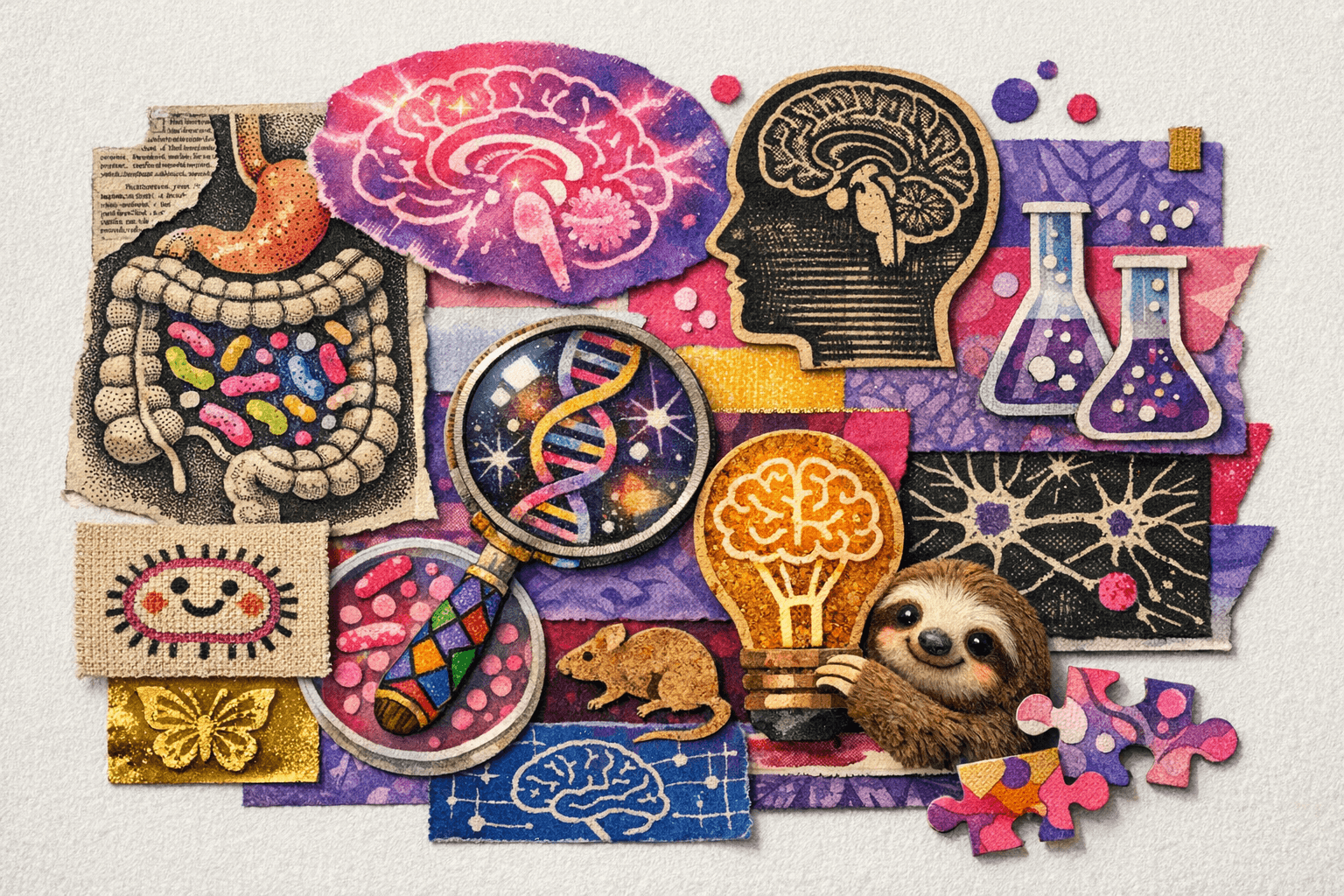
Reviewed by Sofia Sigal-Passeck, Slothwise co-founder & National Science Foundation-backed researcher
What if some of the story of human intelligence starts in the gut? That idea may sound strange, but a new Northwestern University study suggests the microbes living in the digestive system can directly influence how the brain develops and works. In a new report on primate gut microbes and brain function, researchers found that gut microbes from different primates changed brain activity in mice in ways linked to energy use, learning, and development.
How the gut microbiome may affect intelligence
The human brain is expensive. It uses a lot of energy just to grow, think, remember, and keep the body running. Scientists have long wondered how humans evolved such large brains compared with other primates. This new research points to one possible helper: the gut microbiome.
The gut microbiome is the huge community of bacteria and other tiny organisms living in the intestines. These microbes help break down food and make useful compounds. In this study, researchers asked a bold question: could gut microbes from species with larger brains help support brain-related functions better than microbes from species with smaller brains?
That does not mean microbes alone create intelligence. Brain size, genes, environment, nutrition, and early life experiences all matter. But the study suggests microbes may be one important part of the picture.
What scientists did in the primate microbiome study
The research team used mice raised without any microbes of their own. That gave the scientists a very clean starting point. Then they transplanted gut microbes from three primate species into the mice: humans and squirrel monkeys, which have relatively larger brains, and macaques, which have relatively smaller brains.
After eight weeks, the mice showed clear differences in brain function depending on which primate microbes they had received. Mice with microbes from larger-brained primates had stronger activity in genes tied to energy metabolism and synaptic plasticity. Synaptic plasticity is the brain's ability to strengthen connections and adapt, which is a key part of learning.
In simple terms, the microbes appeared to nudge the brain toward different developmental patterns. That is especially interesting because the researchers also compared the mice with real primate brain data and found similar gene activity patterns.
Why brain energy and learning pathways matter
Brains need fuel. If a growing brain cannot get enough energy, development may be affected. The mice that received microbes from larger-brained primates showed more activity in pathways that help cells produce energy. They also showed more activity in pathways involved in communication between brain cells.
This matters because learning depends on brain cells being able to send signals efficiently and change with experience. Think of it like building roads between neighborhoods. Better roads can help messages travel faster and more smoothly.
For families, this does not mean taking random probiotics will make someone smarter. The study was done in mice, not people, and it looked at very specific microbial communities from primates. Still, it adds to a growing body of evidence that gut health and brain health are closely connected.
Could gut microbes shape neurodevelopmental conditions?
One of the most talked-about findings was that mice given microbes from smaller-brained primates showed gene expression patterns linked to conditions such as ADHD, autism, bipolar disorder, and schizophrenia. This does not mean these conditions are caused only by gut microbes. These are complex disorders with many influences, including genetics and environment.
But the study does support the idea that microbes may play a causal role in brain development. That is different from simply finding a loose association. If future research confirms this in people, it could help scientists better understand why early life gut health may matter so much.
If you are curious about related biology, Slothwise has a helpful explainer on how the TRPM4 gene shapes cancer and immune responses. It is not the source of this research, but it is a useful example of how tiny molecular systems can have big effects on health.
What this means for human brain development
The biggest takeaway is not that microbes are magic. It is that the brain may develop in partnership with the body more than we once thought. The digestive system, immune system, and nervous system constantly send signals back and forth. This is often called the gut-brain axis.
For everyday health, this reinforces familiar advice: a varied diet, enough fiber, sleep, physical activity, and avoiding unnecessary antibiotics can all help support a healthy gut microbiome. None of these is a guaranteed way to change brain development, but they are sensible habits that support overall health.
Researchers still need to answer major questions. Which microbes matter most? When in early life are they most important? Can helpful changes last? And can any of this lead to safe treatments?
What the gut-brain axis research does and does not prove
This study is exciting, but it has limits. It was done in mice, not children or adults. Mouse brains are useful for research, but they are not human brains. Also, intelligence is much more than brain size or one set of genes.
Even so, the work is important because it moves beyond simple correlation. It shows that changing the microbiome can change brain-related biology in a controlled experiment. That is a meaningful step forward in understanding evolution and health.
If you enjoy following research like this, tools such as Slothwise and other health AI platforms can help people keep up with complex studies in a more understandable way. For broader metabolism context, Slothwise also offers a plain-language article on how sweeteners may help maintain weight loss and support a healthy gut. Again, that article is only for extra context, not the source of the primate brain findings.
Why this microbiome discovery matters
The study suggests that part of what helped large primate brains thrive may have come from a partnership with gut microbes. That is a fascinating idea because it connects evolution, nutrition, development, and mental health in one story.
It also reminds us of something simple and powerful: humans are not made of human cells alone. We live alongside trillions of microbes, and they may be helping shape far more of our biology than we once realized.
Cool Health Tech
Apr 10, 2026
Buoy Health vs Slothwise: Which AI Health App Is Right for You?
Buoy Health was one of the original AI symptom checkers, born at Harvard and backed by Cigna, Humana, and Optum. It raised $87 million. Here is how it compares to Slothwise in 2026.
Cool Health Tech
Apr 10, 2026
Ada Health vs Slothwise: Which AI Health App Is Right for You?
Ada Health is the most accurate AI symptom checker, validated in a peer-reviewed BMJ Open study. Slothwise connects to your actual medical records and monitors your health continuously. They solve different problems.
Cool Health Tech
Apr 10, 2026
K Health vs Slothwise: Which AI Health App Is Right for You?
K Health raised over $400 million and shut down its consumer app in December 2025. Slothwise is independently built, listed on Medicare.gov, and still here. Here is how the two compare.