Science News
Pink noise for sleep: surprising risks explained
Pink noise for sleep may reduce REM sleep, while earplugs may protect rest better. Learn what the new study means for better sleep.
Reviewed by Sofia Sigal-Passeck, Slothwise co-founder & National Science Foundation-backed researcher
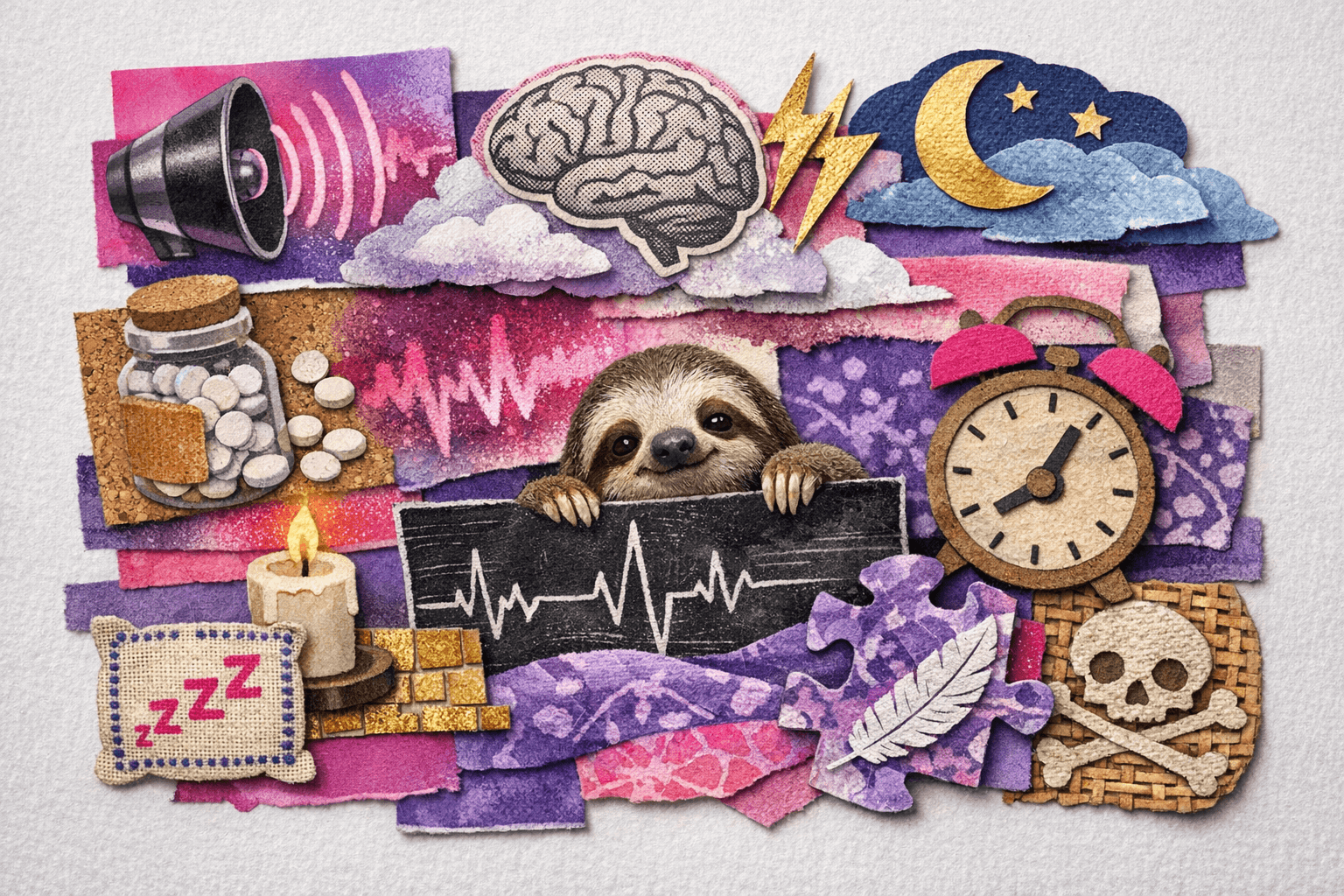
Many people turn on a sound machine at night hoping it will help them sleep. Rain sounds, ocean waves, white noise, and pink noise are all popular. But a new University of Pennsylvania sleep study reported by ScienceDaily suggests that pink noise for sleep may not be as helpful as many people think.
The research, led by Dr. Mathias Basner at the Perelman School of Medicine and published in the journal Sleep, found that pink noise reduced REM sleep in healthy adults. Earplugs, on the other hand, did a much better job protecting sleep from traffic-like noise.
What is pink noise for sleep?
Pink noise is a type of steady background sound. It spreads sound across many frequencies, but it puts a little more energy into lower tones, so it often sounds softer and deeper than white noise. Some people compare it to gentle rainfall or rustling leaves.
Because it can cover up sudden noises, many apps and sound machines market pink noise as a sleep helper. That sounds sensible at first. If a barking dog or passing car wakes you up, a steady sound might seem like a useful shield. But sleep is not just about falling asleep. It is also about staying in the right sleep stages long enough for the brain and body to recover.
How pink noise affects REM sleep
In this study, 25 healthy adults ages 21 to 41 spent seven nights in a sleep lab. Researchers gave them eight-hour chances to sleep under different conditions, including aircraft noise, pink noise alone, aircraft noise plus pink noise, and aircraft noise while wearing earplugs.
The pink noise was played at 50 decibels, which is about as loud as moderate rainfall. Even at that level, pink noise on its own was linked to nearly 19 fewer minutes of REM sleep compared with quiet nights.
REM sleep is the stage most connected with dreaming, but it does much more than that. It helps with memory, learning, emotional balance, and brain development. If REM sleep gets cut short often, that could matter for mood, focus, and how rested a person feels.
Why deep sleep and REM sleep matter for health
Your brain moves through several sleep stages every night. Deep sleep, also called N3 sleep, is especially important for physical recovery and clearing waste from the brain. REM sleep helps the brain sort memories and manage emotions.
The study found that aircraft noise reduced deep sleep by about 23 minutes per night. When pink noise and aircraft noise were combined, sleep got even worse. Participants lost both deep sleep and REM sleep, and they spent about 15 extra minutes awake during the night.
That matters in real life because many people use sound to block city noise, snoring, or traffic. If the masking sound changes sleep stages too, then the fix may create a new problem.
Are earplugs better than sound machines?
In this study, earplugs looked much more helpful than pink noise. They largely prevented the deep sleep loss caused by aircraft noise. People also reported fewer problems with lighter sleep, repeated awakenings, and poorer sleep quality when earplugs were used.
That does not mean earplugs are perfect for everyone. Some people find them uncomfortable, and they may not be suitable in situations where hearing an alarm or a child is important. Still, these findings suggest that blocking noise at the ear may be better than adding more noise to the room.
For everyday sleep, this is a practical takeaway. If outside noise is the main problem, reducing it directly may be smarter than covering it with continuous sound.
Is pink noise bad for children and babies?
This is one of the biggest concerns raised by the researchers. Children, especially babies and toddlers, spend more time in REM sleep than adults. If pink noise reduces REM sleep, young brains could be more sensitive to that effect.
The study did not test babies or children, so we cannot say for sure that the same thing happens in them. But the researchers urged caution, especially because many parents place sound machines close to cribs and beds.
That is a good example of why sleep advice should be careful, not trendy. A product can be popular without being well tested for long-term safety.
What this sleep study means for sound machines and health AI
This does not prove that every sound machine is harmful or that every person should stop using one tonight. The study was small, and it looked at short-term effects in healthy adults in a lab. More research is still needed on long-term use, different types of broadband noise, and safe sound levels.
But it does raise an important question: are we paying too much attention to falling asleep and not enough attention to sleep quality? That is where tools like health AI may eventually help. Better sleep technology should not just play sounds. It should help people understand whether they are actually sleeping better.
For example, people interested in digital wellness can explore health AI tools for mood tracking and stress management for more context on how smart tools may support mental wellness. And if you enjoy learning how science and technology affect health in surprising ways, Slothwise also offers a helpful explainer on gene-edited animals made in one generation.
How to protect sleep from noise naturally
If noise keeps you awake, simple steps may help. Try earplugs if they feel comfortable. Close windows during loud traffic hours. Move noisy devices away from the bed. Use curtains, rugs, or soft furniture to reduce echo in the room. Keep bedrooms cool, dark, and quiet when possible.
If you already use pink noise for sleep and feel fine, there is no need to panic. But it may be worth testing whether you sleep just as well, or even better, with less background sound. If you wake up groggy, forgetful, or unrested, the sound machine itself might be worth reconsidering.
Sleep is not one-size-fits-all. This study is a reminder that quiet may sometimes be better than the soothing sounds we have been told to trust.
Cool Health Tech
Apr 10, 2026
Buoy Health vs Slothwise: Which AI Health App Is Right for You?
Buoy Health was one of the original AI symptom checkers, born at Harvard and backed by Cigna, Humana, and Optum. It raised $87 million. Here is how it compares to Slothwise in 2026.
Cool Health Tech
Apr 10, 2026
Ada Health vs Slothwise: Which AI Health App Is Right for You?
Ada Health is the most accurate AI symptom checker, validated in a peer-reviewed BMJ Open study. Slothwise connects to your actual medical records and monitors your health continuously. They solve different problems.
Cool Health Tech
Apr 10, 2026
K Health vs Slothwise: Which AI Health App Is Right for You?
K Health raised over $400 million and shut down its consumer app in December 2025. Slothwise is independently built, listed on Medicare.gov, and still here. Here is how the two compare.