 Slothwise
Slothwise Awarded the DiMe Seal for Quality and Trust in Digital Health (2026)
Slothwise earns the DiMe Seal, an independent quality designation held by fewer than 50 of the world's 350,000+ digital health apps.
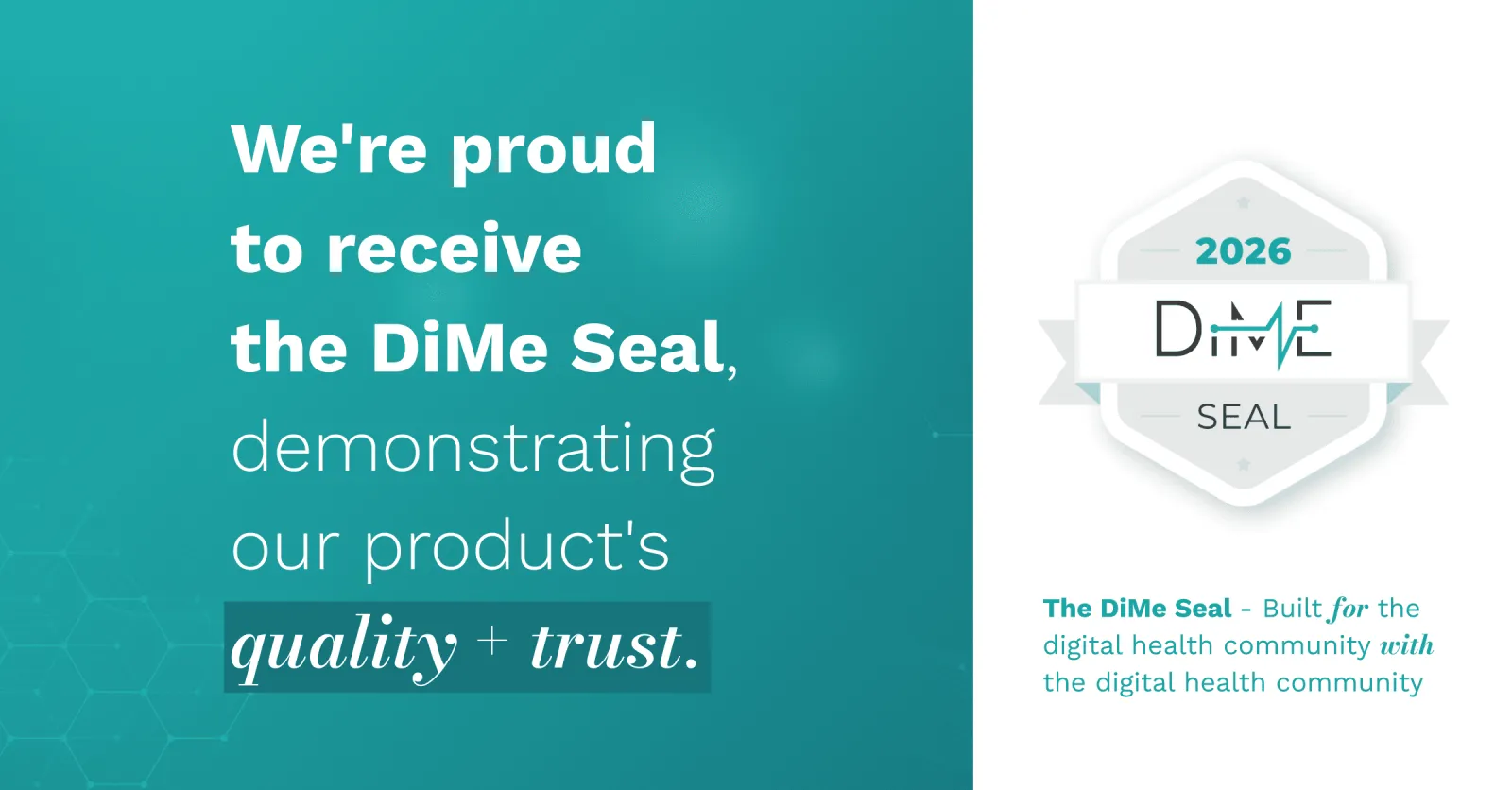
Slothwise has been awarded the DiMe Seal by the Digital Medicine Society (DiMe), a global nonprofit dedicated to advancing the safe, effective, and equitable use of digital health tools. The designation recognizes digital health products that demonstrate performance across evidence, privacy and security, and usability, three domains that together define whether a health app can be trusted with real patient data.
What is the DiMe Seal?
The DiMe Seal is an independent quality designation for digital health software. It was developed by the Digital Medicine Society through a process that reviewed over 1,000 scientific articles, 47 regulatory guidances, and 112 standards programs to create a comprehensive evaluation framework.
Products earning the seal must demonstrate performance across three domains:
-
Evidence: Whether the product's clinical content and features are grounded in established medical practices and peer-reviewed research.
-
Privacy and security: How user data is collected, stored, protected, and whether it is shared with third parties.
-
Usability: Whether real people can use the product effectively and whether it meets accessibility standards.
The framework is overseen by an independent Governance Committee of 16 leaders from across the healthcare ecosystem, including representatives from the American Hospital Association, America's Health Insurance Plans (AHIP), Epic, the US Department of Veterans Affairs, Boston Children's Hospital, and a16z Bio + Health.
Why does the DiMe Seal matter?
There are more than 350,000 digital health apps available worldwide. Most have never been independently reviewed. A 2021 BMJ study found that 88% of mobile health apps contained code capable of collecting user data, with the majority of that data collection serving third-party advertising and analytics services rather than the user.
For patients, the DiMe Seal provides a clear, independent signal that an app has been evaluated against published standards for quality and trust. For clinicians and health systems, who typically spend 75 to 150 hours reviewing a single digital health product, the seal simplifies the decision of which tools to recommend.
Fewer than 50 products have earned the DiMe Seal. Other awardees include Noom, Oura, Tidepool, and Welldoc.
How Slothwise met the standard
Slothwise was evaluated across all three DiMe Seal domains. Here is how the product aligns with each:
-
Evidence: Health information in Slothwise is sourced from users' own medical records, peer-reviewed research, and established clinical guidelines. AI-generated answers cite their sources and are grounded in the user's actual health data rather than generic information.
-
Privacy and security: Slothwise does not run ads, does not sell user data, and does not share personal health information with third parties. Technical safeguards protect medical records, lab results, and biometric data stored on the platform.
-
Usability: Slothwise is accessible through both a native app (iOS and Android) and text messaging, letting users interact with their health data without needing to download or open an app. A recent study found that a median of 70% of health app users stop using their app within the first 100 days; Slothwise's text-based interface is designed to stay accessible in the tools people already use every day.
CMS Medicare App Library recognition
In February 2026, the Centers for Medicare and Medicaid Services (CMS) recognized the DiMe Seal as an evaluation pathway for the Medicare App Library, a new directory on Medicare.gov that will help 68 million Medicare beneficiaries discover trusted digital health tools. The DiMe Seal is one of the accepted credentials for listing, meaning products that have earned the seal have already cleared a key step in the qualification process.
Slothwise is working toward the remaining steps for CMS listing.
What this means for Slothwise users
For current users, nothing changes about how Slothwise works. The DiMe Seal is an external confirmation of the privacy, security, and quality practices that were already in place.
For anyone evaluating health apps, the seal adds an independent data point. When an app asks for access to medical records, lab results, and daily health data, knowing that a third-party organization has reviewed its approach to handling that information makes the decision easier. Slothwise is the only AI-powered health assistant available through both a native app and text messaging to have completed the DiMe Seal evaluation.
Frequently asked questions
What is the DiMe Seal?
The DiMe Seal is an independent quality designation from the Digital Medicine Society. It evaluates digital health products across evidence, privacy and security, and usability, three domains built from over 1,000 scientific articles and 47 regulatory guidances.
How many apps have earned the DiMe Seal?
Fewer than 50 out of more than 350,000 digital health apps worldwide have earned the designation.
Is the DiMe Seal the same as FDA clearance?
No. FDA clearance applies to medical devices that diagnose or treat conditions. The DiMe Seal evaluates software quality, privacy, and evidence across a framework designed specifically for digital health tools.
Does the DiMe Seal mean Slothwise is HIPAA compliant?
The DiMe Seal is a separate designation. HIPAA compliance governs how covered entities handle protected health information. The DiMe Seal evaluates broader product quality across evidence, usability, and privacy and security.
Does earning the DiMe Seal change how Slothwise handles my data?
No. The seal recognizes practices already in place. Slothwise does not sell data, does not run ads, and does not share personal health information with third parties.
What is the CMS Medicare App Library?
The Medicare App Library is a directory launching on Medicare.gov to help Medicare beneficiaries find trusted digital health tools. The DiMe Seal is one of the accepted credentials for listing.