Health News
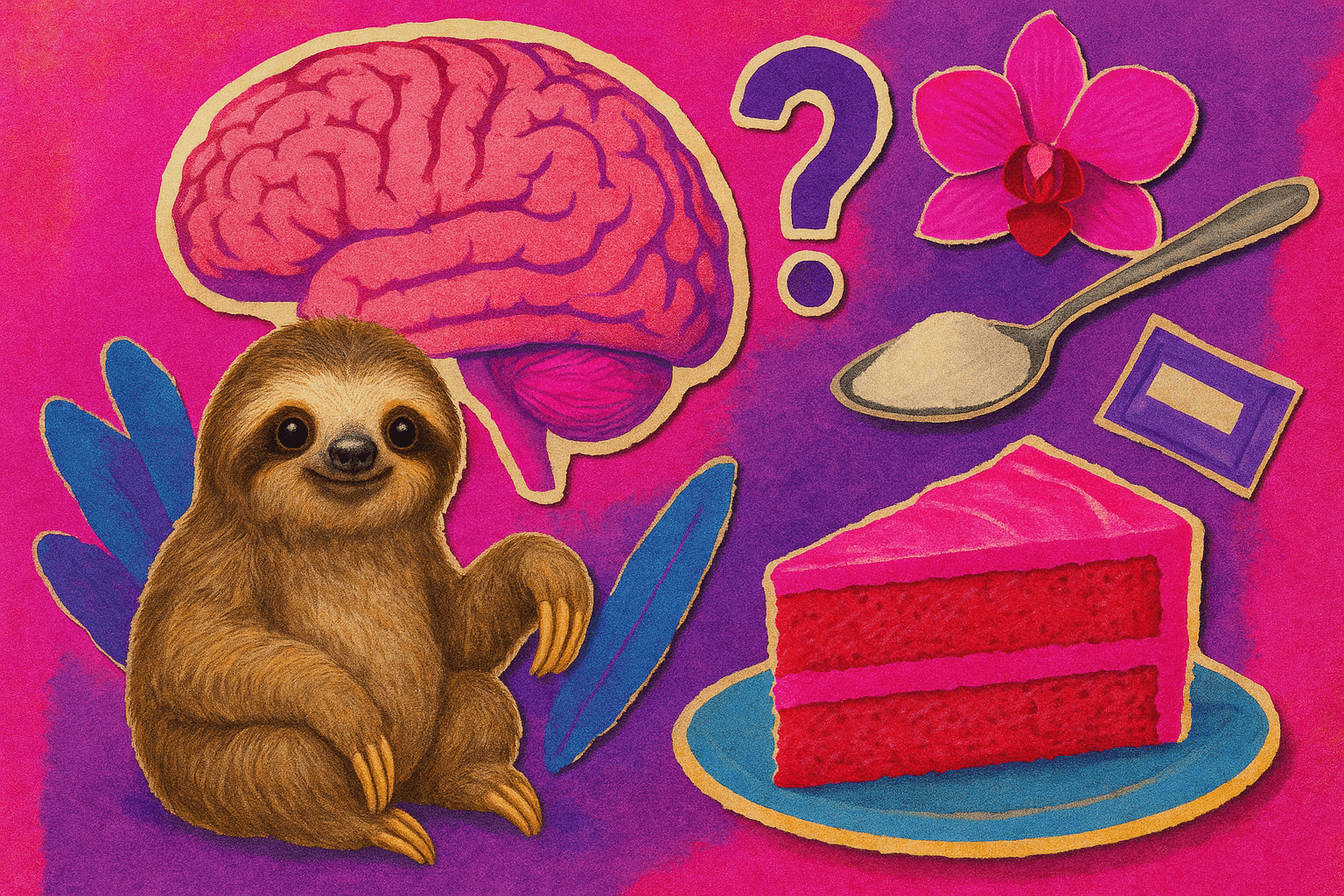
Do artificial sweeteners affect your brain health?
Recent studies suggest artificial sweeteners may impact memory and thinking, raising new questions about brain aging and health. Learn what this means for your diet and well-being.
Reviewed by Sofia Sigal-Passeck, Slothwise co-founder & National Science Foundation-backed researcher
Have you ever wondered if the sweet taste in your favorite sugar-free gum or diet soda could affect your brain? Millions of people use artificial sweeteners to cut back on sugar and manage health problems like diabetes, but scientists are now taking a closer look at how these sugar substitutes might influence our memory and thinking as we age. In this friendly deep dive, we’ll explore what recent research says about artificial sweeteners and brain health, and what it could mean for you and your family.
What are artificial sweeteners and why do people use them?
Artificial sweeteners are special ingredients that make food taste sweet without adding real sugar. You might know them by names like aspartame, sucralose, saccharin, erythritol, and xylitol. They come in powders, little tablets, and even liquid drops. People often use them because they have almost no calories and do not cause big spikes in blood sugar, so they’re especially popular with people who have diabetes or are trying to lose weight. You can learn more about how replacing added sugar with sweeteners may help with weight loss and gut health in this helpful summary from Slothwise.
Do sweeteners really help with blood sugar?
For years, doctors and the Food and Drug Administration (FDA) have said that several artificial sweeteners are safe if you use them properly. Research shows these sweeteners usually do not cause the same fast rise in blood sugar as sugar does, which is why they’re often recommended for people with diabetes. But some scientists have found that artificial sweeteners might not work the same way for everyone and could even change the way your body handles glucose and insulin. If you’re curious about the details, you can check out this article from Medical News Today on artificial sweeteners and blood sugar effects.
What does the latest science say about sweeteners and brain aging?
Recently, a study published in Neurology and discussed by Medical News Today found something surprising: people who regularly consumed artificial sweeteners like aspartame, saccharin, acesulfame-K, erythritol, xylitol, and sorbitol showed a decline in memory and thinking abilities—almost like their brains had aged an extra 1.6 years compared to people who didn’t use these sweeteners. You can read further details in the full Medical News Today article. This research doesn’t mean that sweeteners definitely cause brain aging, but it suggests there might be a link worth studying more.
Could sugar also affect brain and body aging?
It’s not just sweeteners that come with questions. Eating too much sugar can also be harmful to our bodies and brains. For instance, high sugar intake has been connected with faster aging and increased risk of health problems. Eating a diet rich in antioxidants (like fruits and vegetables) may help slow this down. If you’re interested in how sugar and antioxidants influence aging, check out this summary from Medical News Today on sugar, aging, and diet.
What do brain scans and genetics say about memory and aging?
Scientists are always learning more about what makes our brains age. Some studies are using advanced brain scans to predict if someone might be at risk for memory problems or conditions like dementia. You can read about this new research in another Medical News Today article on predicting dementia with brain scans. And for a better understanding of how your genes can also play a role in how you age, there’s a clear explanation in this Slothwise article.
What it means for patients
So, should you stop using artificial sweeteners? The truth is, scientists are still figuring out exactly how these sugar substitutes affect our bodies and brains in the long run. If you use sweeteners to help with a health condition, there’s no need to panic, but it’s a good idea to stay informed and talk to your doctor if you have concerns. Eating a balanced diet, staying active, and keeping your brain challenged with new activities are all great ways to support your health. As health AI and trusted resources like Slothwise continue to monitor new studies, we’ll learn more about the safest ways to satisfy our sweet tooth and protect our brains.
Cool Health Tech
Apr 10, 2026
Buoy Health vs Slothwise: Which AI Health App Is Right for You?
Buoy Health was one of the original AI symptom checkers, born at Harvard and backed by Cigna, Humana, and Optum. It raised $87 million. Here is how it compares to Slothwise in 2026.
Cool Health Tech
Apr 10, 2026
Ada Health vs Slothwise: Which AI Health App Is Right for You?
Ada Health is the most accurate AI symptom checker, validated in a peer-reviewed BMJ Open study. Slothwise connects to your actual medical records and monitors your health continuously. They solve different problems.
Cool Health Tech
Apr 10, 2026
K Health vs Slothwise: Which AI Health App Is Right for You?
K Health raised over $400 million and shut down its consumer app in December 2025. Slothwise is independently built, listed on Medicare.gov, and still here. Here is how the two compare.