Health News
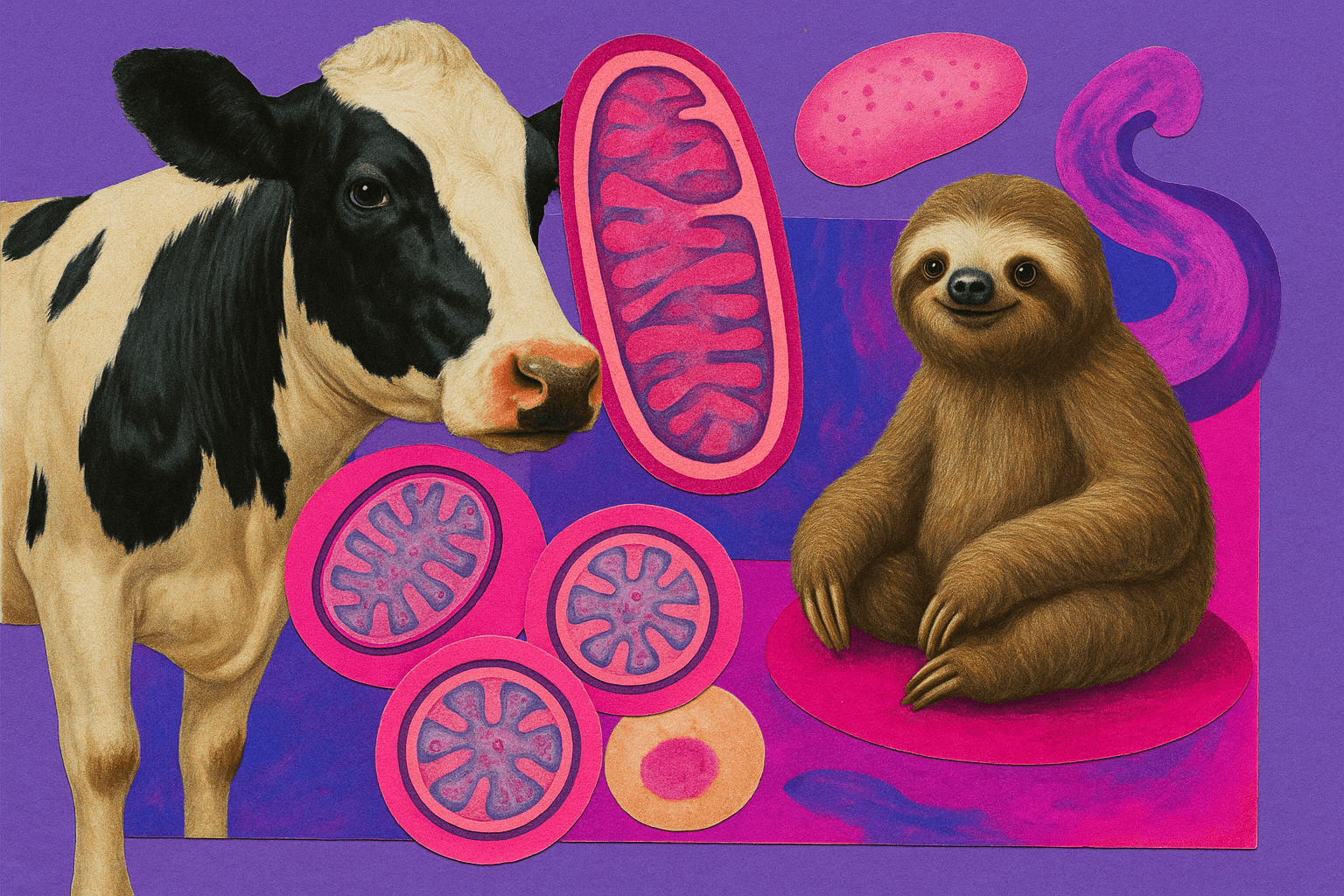
How cow fat cells adapt their mitochondria size
Discover how the size and shape of mitochondria in dairy cow fat cells change with body condition, revealing clues about energy balance, metabolism, and animal health.
Reviewed by Sofia Sigal-Passeck, Slothwise co-founder & National Science Foundation-backed researcher
Have you ever wondered how cows manage their energy and stay healthy, especially as they gain or lose weight? Scientists have been curious about this, too. A recent study explored a tiny but mighty part of cow fat cells: the mitochondria. These are often called the "powerhouses" of the cell because they help turn food into energy. The study, published in Scientific Reports, reveals fascinating new details about how the size and shape of these mitochondria change depending on the cow's body condition.
Why mitochondria matter in cow health
Mitochondria play a major role in how animals—and humans—use energy. Inside fat cells, they help store and release energy as needed. In dairy cows, keeping the right balance of energy is crucial for good health and milk production. If a cow is too thin or too heavy, it can affect her ability to make milk and even her overall well-being. Understanding how mitochondria adapt can help farmers and veterinarians support healthier cows, which is important for both animal welfare and food production.
Different fat tissues, different adaptations
The study looked at two specific fat regions in cows: just under the skin on the flank, and around the kidneys (called perirenal fat). Researchers grouped cows into three categories based on their body condition: very thin (cachectic), normal, and overweight. They then used special microscopes to measure the length and thickness of over 600 mitochondria from these different areas.
What they found was surprising: the size and shape of mitochondria changed not only with the cow's body condition but also with where the fat was located. For example, mitochondria in the perirenal fat of normal-weight cows were the largest, while those in very thin cows were the smallest. These differences suggest that fat in different parts of the body may have unique jobs and adapt to the cow's needs in special ways.
Mitochondria have size limits
One of the most interesting discoveries was that most mitochondria fell within a certain size range. Very few were found with both a medium length and medium thickness, creating what scientists called an "exclusion zone"—a sort of forbidden area for mitochondrial size. This pattern was seen in all cows, no matter their weight or where the fat was found. It suggests that there might be physical or functional rules that prevent mitochondria from growing into certain shapes or sizes. Scientists think this might be because of how fat is stored in cow cells, which only have space for so many mitochondria around their big fat droplets.
If you are interested in how changes in fat cells can influence overall health and metabolism, you might also enjoy reading a Slothwise summary on how weight loss transforms fat tissue cells—it explains how our bodies adapt at the cellular level when we lose weight.
Body condition, metabolism, and energy
These findings are important because they show that mitochondria are highly adaptable. When cows are very thin, their mitochondria are smaller, possibly because there is less energy to process. In normal and overweight cows, mitochondria get larger, which may help them handle more energy and fat storage. But even then, mitochondria never grow beyond certain shapes, suggesting the cell has safety checks to avoid problems.
Research like this connects to other studies about genetics and metabolism, such as those discussed in a Slothwise article on how our genes influence frailty as we age. Just as in cows, our own cells adapt to our body’s energy needs and genetic background, which affects our health over time.
What it means for cows, farmers, and us
This research helps scientists and farmers better understand how cows regulate their energy use and how their fat cells work at the smallest level. By learning about these tiny changes, farmers can make smarter decisions about feeding and caring for their cows, which can improve animal health and milk production. It may also help in developing new ways to manage metabolic diseases in animals—and even in humans, since many of these processes are similar.
The future: from farm to health AI
As scientists continue to study mitochondria, they may use new health AI tools to analyze vast amounts of data, making discoveries even faster. Companies like Slothwise are already using health AI to interpret complex science for everyone, helping us understand how tiny details inside our cells can make a big difference in health. This kind of research not only teaches us about cows but also gives clues about our own biology, aging, and the future of medicine.

Cool Health Tech
Apr 10, 2026
Buoy Health vs Slothwise: Which AI Health App Is Right for You?
Buoy Health was one of the original AI symptom checkers, born at Harvard and backed by Cigna, Humana, and Optum. It raised $87 million. Here is how it compares to Slothwise in 2026.

Cool Health Tech
Apr 10, 2026
Ada Health vs Slothwise: Which AI Health App Is Right for You?
Ada Health is the most accurate AI symptom checker, validated in a peer-reviewed BMJ Open study. Slothwise connects to your actual medical records and monitors your health continuously. They solve different problems.
Cool Health Tech
Apr 10, 2026
K Health vs Slothwise: Which AI Health App Is Right for You?
K Health raised over $400 million and shut down its consumer app in December 2025. Slothwise is independently built, listed on Medicare.gov, and still here. Here is how the two compare.