Science News
How supercharged immune cells may help autoimmune disease
Scientists are exploring how engineered natural killer cells could reset the immune system and offer new hope for people with autoimmune diseases like lupus.
Reviewed by Sofia Sigal-Passeck, Slothwise co-founder & National Science Foundation-backed researcher
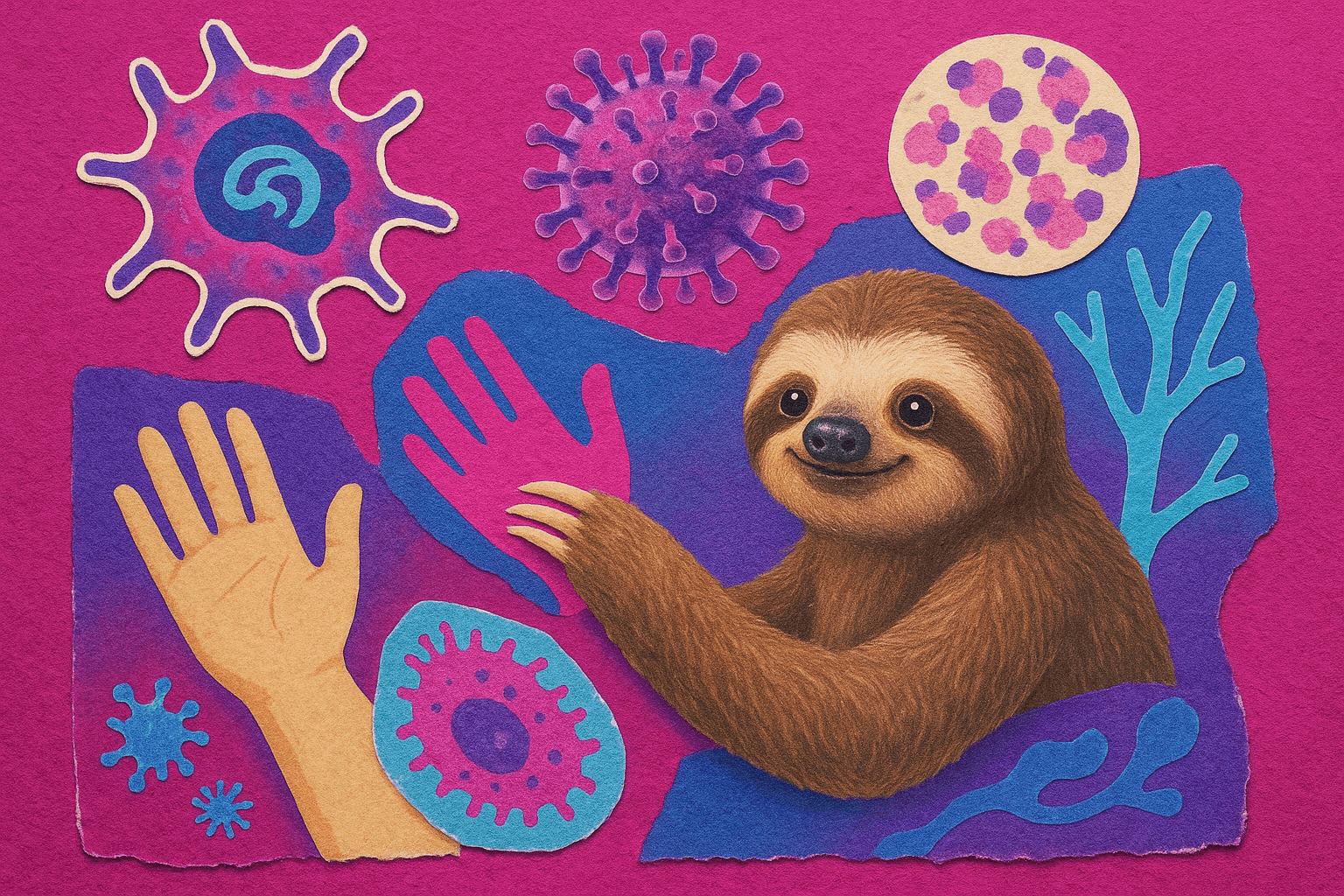
Imagine your body as a bustling city, with the immune system acting like its security team. Sometimes, though, this team gets confused and starts attacking friendly citizens. That is what happens in autoimmune diseases such as lupus—your immune system mistakenly attacks your own body, causing pain and damage. But new research is showing that scientists may have found a way to help the immune system reset itself using special supercharged cells called “natural killer” cells, or NK cells (Nature News).
How natural killer cells work in the body
Natural killer cells are a type of white blood cell. Their job is to spot and destroy cells that are sick or dangerous, such as those infected by viruses or those turning into cancer. Think of them as expert detectives who patrol your body, always on the lookout for troublemakers. Scientists have learned how to give these cells special upgrades by adding new instructions to their DNA. This turns them into “CAR NK” cells, which can be programmed to find and eliminate just the right bad cells.
Autoimmune diseases and their challenges
Autoimmune diseases happen when the immune system gets confused and attacks the body’s own healthy tissues. This is often caused by cells making “autoantibodies”—special proteins that target the body by mistake. Diseases like lupus and systemic sclerosis are just a couple of examples. Treating these illnesses can be very tricky, because the immune system is powerful and complicated. Current treatments often try to calm down the whole immune system, which can leave people more likely to get infections.
Turning cancer tech against autoimmunity
Some of the latest cancer treatments use a technology called CAR T cells, which are another type of immune cell engineered with a “chimeric antigen receptor” (CAR) to target cancer cells. These CAR T therapies have helped many people with certain blood cancers live much longer (Cell, Wang et al.). Early studies even show that these treatments can help some people with autoimmune diseases by forcing their illness into remission. However, making CAR T cells is expensive and time-consuming, since each dose must be custom-made from a patient’s own cells.
CAR NK cells might offer a better option. Unlike CAR T cells, CAR NK cells can be made from donor blood and frozen for later use. This means one donation can produce hundreds of doses, making the treatment more affordable and available to more people. Scientists hope that these supercharged NK cells can quickly wipe out the cells causing autoimmunity and then leave the body. This gives the immune system a chance to rebuild itself, hopefully without restarting the disease.
What the latest research shows
In two early clinical trials, scientists tested CAR NK cells in people with autoimmune disorders. One trial’s results were shared at a major medical meeting, and the other was published for scientists to read and discuss. The findings suggest that these engineered NK cells can hunt down and destroy the harmful cells making autoantibodies. Because NK cells do not live long in the body, they might be just enough to hit the reset button without sticking around to cause problems. If the disease comes back, more doses could be given.
What it means for patients
The hope is that CAR NK cell therapy could help people with autoimmune diseases feel better and live more normal lives—without the risks and high costs of older treatments. While more studies are needed, this approach could someday make it much easier for people to access care. Scientists will keep studying how safe and effective these therapies are, but the early signs are promising.
If you are curious about how our bodies defend themselves, you might want to learn more about how viruses can sneak into our cells. For more on this topic, check out this easy-to-read summary: how a virus finds its way into human cells. And if you are interested in how friendly bacteria on our skin compete or cooperate, you can read this fun article: how skin bacteria cooperate and compete on your face. These topics are all part of the exciting world of health science, where platforms like Slothwise and health AI tools help make complex discoveries easier to understand.
As research continues, health AI and scientists will keep working together to come up with new ways to help people with autoimmune diseases, making the future a little brighter for everyone.
Cool Health Tech
Apr 10, 2026
Buoy Health vs Slothwise: Which AI Health App Is Right for You?
Buoy Health was one of the original AI symptom checkers, born at Harvard and backed by Cigna, Humana, and Optum. It raised $87 million. Here is how it compares to Slothwise in 2026.

Cool Health Tech
Apr 10, 2026
Ada Health vs Slothwise: Which AI Health App Is Right for You?
Ada Health is the most accurate AI symptom checker, validated in a peer-reviewed BMJ Open study. Slothwise connects to your actual medical records and monitors your health continuously. They solve different problems.
Cool Health Tech
Apr 10, 2026
K Health vs Slothwise: Which AI Health App Is Right for You?
K Health raised over $400 million and shut down its consumer app in December 2025. Slothwise is independently built, listed on Medicare.gov, and still here. Here is how the two compare.