Health News
How gut cells die in inflammatory bowel disease
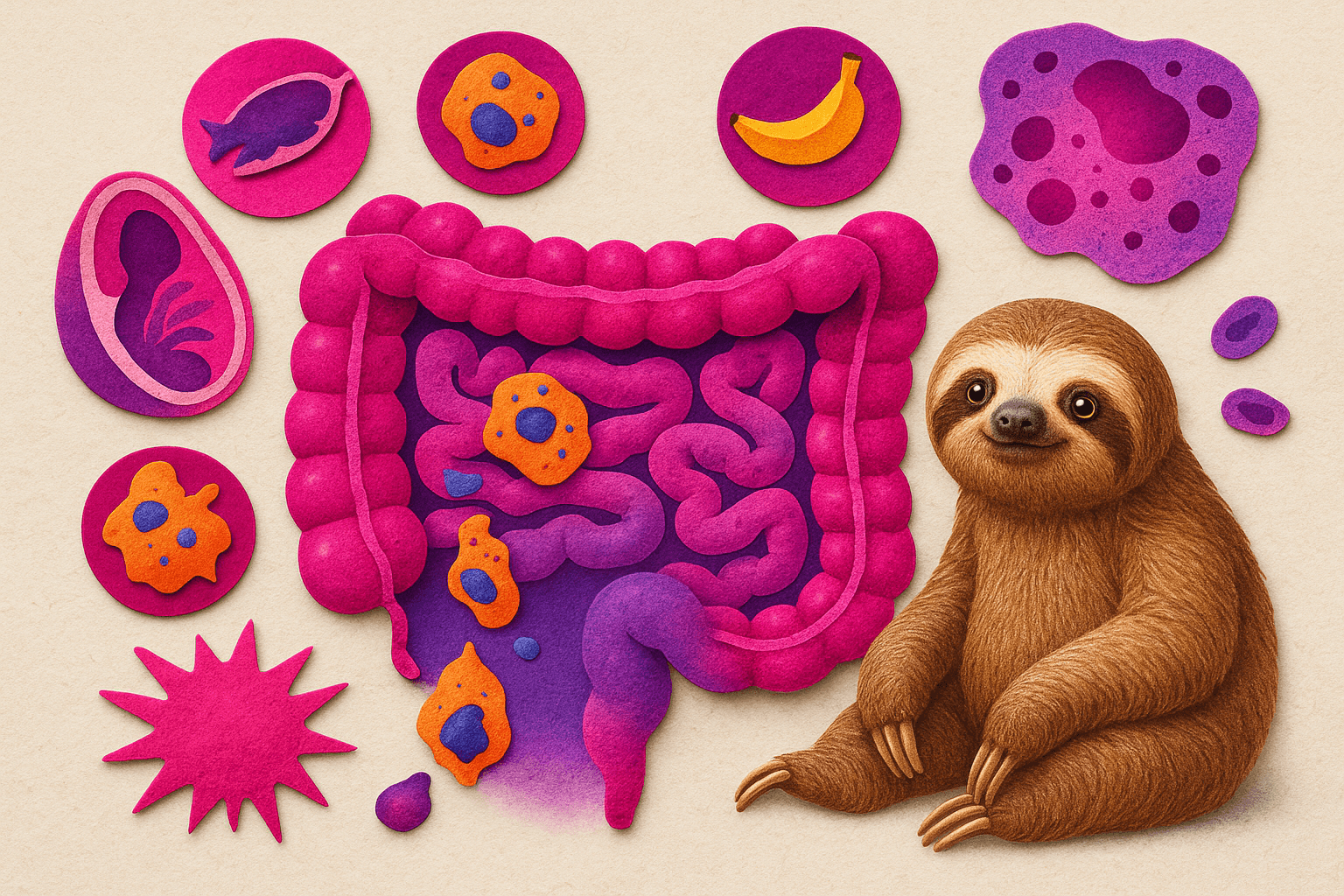
Scientists found that certain fats from gut fibroblasts can trigger cell death in IBD, revealing a new target for future treatments and improving our understanding of intestinal health.
Reviewed by Sofia Sigal-Passeck, Slothwise co-founder & National Science Foundation-backed researcher
Have you ever wondered what really happens inside your gut when someone has inflammatory bowel disease (IBD)? Scientists have long known that cells lining the gut, called epithelial cells, die off during IBD, making the gut sore and inflamed. But until now, they were not sure exactly what caused this cell death. Thanks to new research, we are a step closer to understanding this puzzle—and it all comes down to a special kind of cell death called ferroptosis and some sneaky fats made by your own body.
What is ferroptosis and why does it matter?
Ferroptosis is a word you might not hear every day, but it is very important for your health. It is a special way that cells can die when too much iron and certain types of fats build up, causing lots of damage from something called oxidative stress. Unlike other types of cell death, like apoptosis (which is more like a cell's planned retirement), ferroptosis is more like a cell being destroyed by a rush of dangerous molecules. Scientists first described this process in detail in a study you can read about here: Nature Reviews Molecular Cell Biology.
The mystery of dying gut cells in IBD
People with IBD, like Crohn's disease or ulcerative colitis, have painful, inflamed guts. Doctors noticed that their gut lining loses many epithelial cells, but for a long time, the exact reason was not clear. Recent studies have shown that oxidative stress is a big part of the problem, but where does it come from? The answer, it turns out, is linked to another type of cell in the gut called fibroblasts.
Fibroblasts and their surprising role in gut health
Fibroblasts are cells that help make the structure of our tissues. Normally, they are the quiet builders of the gut, but in IBD, they start making unusual fats called polyunsaturated fatty acids (PUFAs). A new study published in Nature Metabolism (Kim, Jeong & Lee, 2025) discovered that these fibroblast-derived fats can be toxic to nearby gut lining cells. When these fats reach the epithelial cells, they trigger ferroptosis, causing the cells to die off and the gut to become even more inflamed.
Can we stop this harmful cell death?
The same study found something hopeful. There is an enzyme in fibroblasts called ACSL4 that helps make these dangerous fats. When scientists used medicine or genetic tricks to block ACSL4, the fibroblasts could not make as many toxic fats, and the gut cells were protected from ferroptosis. This led to less inflammation and damage in mouse models of IBD. This discovery gives researchers a new target for future medicines that could help people with IBD feel better by protecting their gut lining.
What it means for patients
Understanding how ferroptosis works in the gut could help doctors come up with new treatments for IBD. Instead of just treating the symptoms, future medications might block the harmful fats made by fibroblasts or the ACSL4 enzyme itself. This approach could keep the gut lining healthier for longer and help patients avoid flare-ups. For anyone interested in how health AI tools might support research or patient care, check out this helpful guide on keeping your health data private with AI from Slothwise. While health AI is not directly involved in this study, it is rapidly changing how scientists discover and test new treatments.
Looking ahead: from discovery to treatment
These findings are not just important for people with IBD. They add to our knowledge of how cells die and how our bodies sometimes accidentally harm themselves. Earlier research, such as the study in Nature Metabolism, has also shown that problems with cell metabolism can lead to diseases like IBD. By combining these new discoveries with tools like health AI and resources such as Slothwise, doctors and scientists can design smarter, safer ways to help patients. For more insights into privacy and digital health, Slothwise has a great article on protecting your health data when using AI-powered tools.
In summary, the next time you hear about gut health or IBD, remember that tiny fats and special kinds of cell death are part of the story. Thanks to research and technology, better days may be ahead for people living with gut inflammation.
Cool Health Tech
Apr 10, 2026
Buoy Health vs Slothwise: Which AI Health App Is Right for You?
Buoy Health was one of the original AI symptom checkers, born at Harvard and backed by Cigna, Humana, and Optum. It raised $87 million. Here is how it compares to Slothwise in 2026.
Cool Health Tech
Apr 10, 2026
Ada Health vs Slothwise: Which AI Health App Is Right for You?
Ada Health is the most accurate AI symptom checker, validated in a peer-reviewed BMJ Open study. Slothwise connects to your actual medical records and monitors your health continuously. They solve different problems.
Cool Health Tech
Apr 10, 2026
K Health vs Slothwise: Which AI Health App Is Right for You?
K Health raised over $400 million and shut down its consumer app in December 2025. Slothwise is independently built, listed on Medicare.gov, and still here. Here is how the two compare.